 By
By 

Quick Verdict
Blissey is the best all-around Gym defender, while Chansey is better for long, unattended defense. The strongest Gym mixes bulky Pokémon with different typings to force counter switches.
Who It's For
This guide is for Pokémon GO players who want stronger Gym lineups, better coin timing, and a clearer understanding of motivation and CP decay.
Key Takeaways:
- Best Picks: Blissey, Chansey, Snorlax, Togekiss, Metagross, and Milotic.
- Lineup Tip: Avoid stacking several Normal-type defenders with the same Fighting weakness.
- Coin Tip: Defend for 8 hours 20 minutes, then wait for the Pokémon to return to earn up to 50 PokéCoins.

You find a post claiming that a nearby park is full of Charmander, travel to the location, and discover nothing but ordinary seasonal spawns. The park may still be a Pokémon GO nest—the problem is that the species report could have expired after a migration, seasonal change, or in-game event.
Finding useful Pokémon GO nests is therefore not just a matter of copying coordinates from an old list. You need to find a recent report, confirm that it belongs to the current migration cycle, and explore enough of the area to determine whether the featured Pokémon is actually spawning repeatedly.
This guide explains how Pokémon GO nests work in 2026, where to find nest maps and coordinates, how to verify a report, and how to build an efficient farming route once you locate an active nest.
Do Pokémon GO Nests Still Exist in 2026?
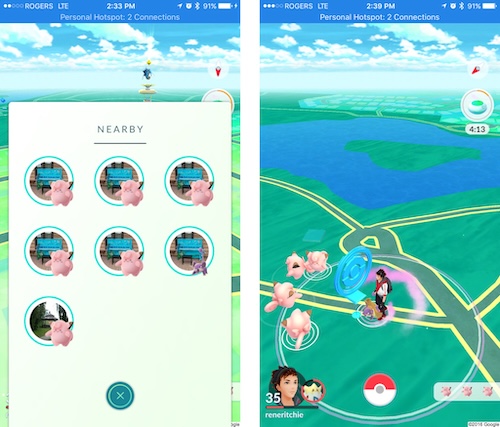
Yes, Pokémon GO nests still exist in 2026. Active community databases continue to record nest reports and migrations, including a new migration recorded on July 16, 2026.
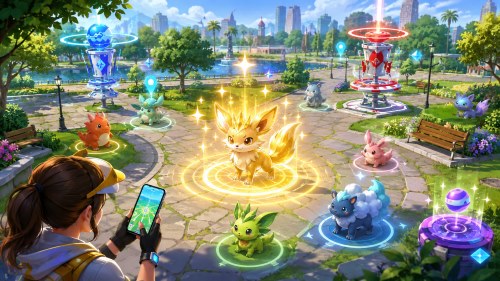
A Pokémon GO nest is a geographical area with defined boundaries—commonly a park or public recreational space—where one eligible Pokémon species appears much more frequently than it normally would. The nesting species does not replace every spawn in the area, so you will still encounter ordinary wild Pokémon while exploring the park.
Nests are especially useful when you need repeated encounters with the same Pokémon. Instead of waiting for occasional random spawns, you can walk a loop through the nest and check multiple spawn points during one session.
Pokémon GO Nest Snapshot for July 2026
- A fresh community-tracked migration occurred on July 16, 2026.
- The normal nest cycle lasts approximately two weeks.
- If the regular cycle continues, the next migration should occur around July 30, 2026.
Migration dates are community-tracked rather than clearly displayed in the game. Always check a current countdown or local community before visiting a reported location.
How Do Pokémon GO Nests Work?
A nest increases the frequency of one Pokémon species within a specific area. In a large park, you might encounter the nesting Pokémon at several different spawn points as you walk between paths, PokéStops, playgrounds, gardens, and other mapped areas.
A genuine nest does not mean that every Pokémon on the map will be the same species. Weather, biome, seasonal, event, Lure, and other wild spawns can appear alongside the nesting Pokémon. The correct way to identify a nest is to look for the same species appearing repeatedly across different parts of the area.
Pokémon GO Nests vs. Random Spawn Clusters
Seeing three identical Pokémon together does not automatically mean you have found a nest. The cluster could have been created by an event, weather conditions, or simple chance.
A stronger nest candidate usually has three characteristics:
- The same species appears at multiple separate spawn points.
- The repeated spawns continue as you move through the area.
- Other trainers have reported the same species during the current migration cycle.
Checking the park more than once can improve confidence, especially when the first visit happens during an event.
Pokémon GO Nests vs. Events
Events can make nests difficult to identify. If an event heavily boosts a featured Pokémon, that species may appear throughout the city—not just inside the park—creating what looks like a temporary nest.
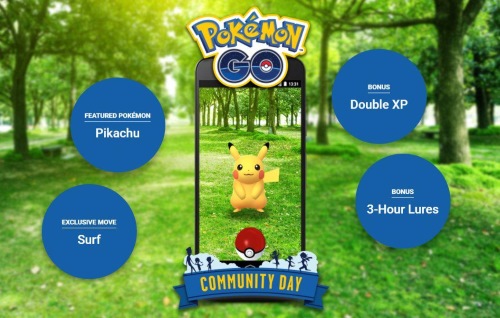
Community Day, Spotlight Hour, GO Fest habitats, and other spawn-focused events should not be treated as evidence that a location is a permanent nest. Wait until the event ends, return to the area, and check whether the suspected nesting species continues to appear.
The current Forever Forward Season runs from June 2 through September 8, 2026. Pokémon distributions can change with each Season, so nest reports and nesting-species lists should always include a recent update date.
How Long Do Pokémon GO Nests Last?
Most Pokémon GO nests keep the same featured species for approximately two weeks. Community migration trackers place the regular rotation at 00:00 UTC every second Thursday, equivalent to Wednesday evening in many North American time zones.
When a migration occurs, the location usually remains a nest, but the featured Pokémon changes. A Charmander nest may become a Machop, Eevee, Magikarp, or another eligible species after the rotation.
This is why old coordinates are not necessarily geographically wrong. The park may still contain a nest, but the species listed beside those coordinates may no longer be accurate.
What Is a Forced Nest Migration?
A forced migration happens when nests change before the normal two-week cycle ends. New Seasons, changes to the nesting pool, and certain Pokémon introductions can cause existing nests to rotate early.
For example, a species may remain at a park for eight days and then change unexpectedly after the game introduces a new nesting pool. The replacement may last only until the next regularly scheduled migration.
As a result, even a report submitted after the previous migration can become outdated. Check for recent Season changes or major game updates before relying on it.
How to Find Pokémon GO Nests Near Me
Pokémon GO does not provide a searchable directory of active nests. Most nest locations are discovered and maintained through park exploration, crowdsourced maps, and local player communities.
The best method depends on how active the Pokémon GO community is in your area.
1 Check Parks and Recreational Areas
Start with larger parks that have several PokéStops, walking paths, and visible spawn points. Walk through the entire area rather than checking only the entrance.
If one species repeatedly appears across different parts of the park, record the park name, coordinates, date, and approximate number of encounters. Revisit the area later or compare your observation with local reports before treating it as confirmed.
Small parks can also contain nests, but they may have too few spawn points to produce an obvious pattern. A low-spawn nest can be real while still being inefficient for farming.
2 Use a Pokémon GO Nest Map
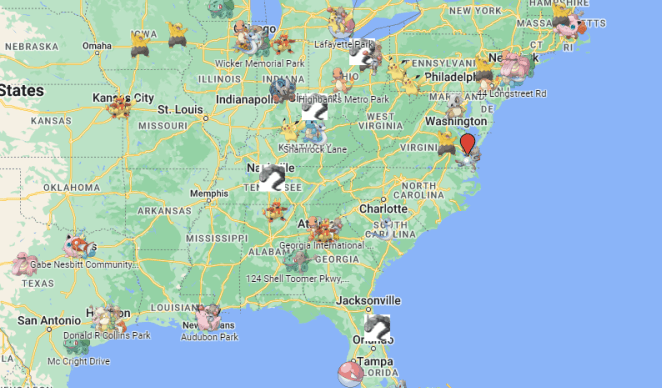
A Pokémon GO nest map can help you identify possible locations before visiting them. Most surviving maps are crowdsourced, meaning their accuracy depends on recent submissions and active local contributors.
PogoMap allows registered members to add locations, vote on map data, and view a nest migration countdown. Its data is community-provided rather than pulled from an official Pokémon GO nest database.
Regional services can sometimes be more reliable than global maps. PoGO Nest, for example, focuses heavily on Southern California and organizes reports by parks, cities, and recent migrations. A smaller database with active local trainers may be more useful than a global map with old or unverified pins.
3 Check Discord, Reddit, Campfire, and Local Groups
Local communities often update faster than public nest websites. Search for your city or region together with terms such as:
- “Pokémon GO nests Discord”
- “Pokémon GO nests Reddit”
- “Pokémon GO nest report”
For searches such as Pokémon GO nests NYC, Pokémon GO nests New York, or Pokémon GO nests San Francisco, a local Discord or Campfire group may have dedicated nest-report channels.
Pay attention to timestamps. A highly detailed report from the previous migration is less useful than a simple report submitted today.
How to Explore Pokémon GO Nest Coordinates with PoKeep
A nest coordinate solves only the first part of the problem. You still need to explore the park boundary, locate productive spawn points, and build a repeatable route.

PoKeep Location Changer lets you enter a destination, change the GPS position of a connected iOS or Android device, and move around an area using several virtual-movement modes. Available functions include a 360-degree joystick, two-point movement, multi-point routes, jump teleport, favorite locations, location history, and GPX route importing.


Step 1 Enter the Verified Pokémon GO Nest Coordinates
After confirming that the report belongs to the current migration cycle, search for the park or paste its coordinates into PoKeep.
Move to a central point rather than assuming the first map pin represents the most productive section. Open Pokémon GO and inspect the surrounding roads, PokéStops, and visible spawns.
Step 2 Explore the Nest with the GPS Joystick

Use PoKeep’s 360-degree joystick to move through the park and check different spawn areas. This is more useful than remaining at one coordinate because nests usually cover a wider geographical boundary.
Keep the movement speed appropriate for the activity you are simulating. The goal is to follow the park layout and discover where the highest concentration of usable spawn points appears.
Step 3 Build a Multi-Point Nest Route

Once you identify productive sections, add them to a multi-point route. A good route might pass through the main PokéStop cluster, follow the park’s paths, and return near the starting position.
PoKeep can also save favorite locations and historical records, helping you return to the same nest during the remainder of the migration cycle. GPX support is useful when you already have a suitable community route for that park.
A saved park route can remain useful after migration even though the featured species changes. Recheck the new nesting Pokémon before deciding whether to farm the route again.
How to Farm a Pokémon GO Nest Efficiently
After confirming the nest, your results depend on how many productive spawn points you can revisit during the session.
Prepare Before Starting the Nest Route
Clear Pokémon storage and make sure you have enough Poké Balls. Constantly stopping to transfer Pokémon or spin for supplies reduces the number of times you can complete the loop.
Bring Pinap Berries when Candy is the priority. A successful catch after using a Pinap Berry provides double Candy, while a Silver Pinap Berry combines the Candy bonus with an improved catch chance.
Follow a Loop Instead of Standing Still
A single coordinate may have only one or two spawn points. A loop through the full nest gives you access to more encounters and lets earlier spawn areas refresh while you explore other sections.
After completing the route, return toward the starting point and check which Pokémon have appeared since your previous pass. Adjust the path if one side of the park consistently produces few encounters.
Use Lures and Incense for More Total Encounters
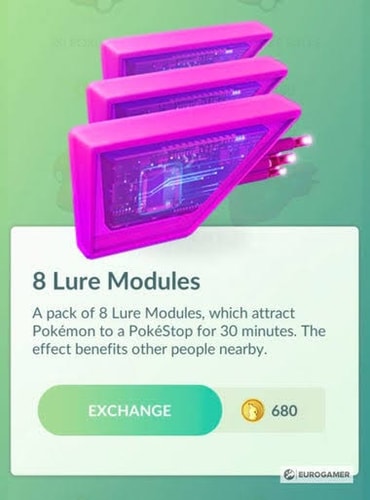
A normal Lure Module attracts wild Pokémon to a PokéStop, while special Lures can attract Pokémon associated with particular types or habitats. Incense attracts additional Pokémon to your location.
These items can make the session busier, but do not use their spawns as proof of the nesting species. Confirm the nest from repeated natural spawns across the area.
Which Pokémon Can Appear in Pokémon GO Nests?
The nesting pool changes over time and can shift with new Seasons. For that reason, a permanent “complete Pokémon GO nest list” can become outdated quickly.
Community nest records include popular species such as Charmander, Magikarp, Eevee, Machop, Gastly, Onix, Swinub, Mudkip, Audino, and many others. The presence of a Pokémon on a broad historical list does not guarantee that it is active in the current seasonal pool.
Charmander, Magikarp, and Eevee Nests
Charmander, Magikarp, and Eevee are all included in established community nesting-species databases. They remain popular targets because they require substantial Candy for evolutions, power-ups, or multiple evolution forms.
Always verify the individual park report rather than searching for an old coordinate labeled “Charmander nest” or “Eevee nest.” The location may remain valid while the Pokémon has changed.
What About Larvitar and Dratini Nests?
Treat old Larvitar and Dratini nest claims cautiously. A concentration of either Pokémon may come from an event, special habitat, biome, or temporary spawn change rather than an ordinary nest.
Check whether the species appears in a recently updated nesting pool and look for multiple reports from the current migration. Do not travel based only on an undated social-media post.
Pokémon GO Nests FAQ
How often do Pokémon GO nests change?
Most nests change approximately every two weeks. Forced migrations can happen earlier when a new Season or nesting-pool change occurs.
Do Pokémon GO maps show nests?
The official game does not offer a searchable nest directory. External Pokémon GO nest maps rely mainly on crowdsourced reports, voting, and local community updates.
How do I find Pokémon GO nests near me?
Check large local parks, use a recently updated Pokémon GO nest map, and search local Discord, Campfire, Reddit, Facebook, or Telegram groups. Prioritize reports made after the latest migration.
Are Pokémon GO nest coordinates permanent?
The park coordinate may remain useful, but its featured species usually changes during migrations. Always separate the location of the nest from the current Pokémon reported there.
Do nests increase Shiny odds?
Nests give you more encounters with one species, which creates more Shiny checks. They do not guarantee a Shiny encounter or advertise a universal nest-specific Shiny bonus.
Do nests guarantee high IVs or hundos?
No. Wild IVs still vary. A nest simply lets you catch and evaluate more members of the same species.
Can I use a Lure Module at a Pokémon GO nest?
Yes. A Lure Module can attract additional wild Pokémon to a nearby PokéStop. However, Lure spawns should be treated separately when you are trying to confirm which Pokémon naturally occupies the nest.
How can I find Pokémon GO nests in NYC or New York?
Use a global map as a starting point, then compare it with recent reports from New York City Discord servers, Campfire groups, Reddit communities, and local social channels. A city-specific community is usually better positioned to confirm what appeared after the latest migration.
Final Thoughts on Finding Pokémon GO Nests in 2026
The hardest part of nest hunting is not finding a park coordinate. It is determining whether the species attached to that coordinate is still current.
Check the report date, compare it with the latest Pokémon GO nest migration, review active events, and look for multiple confirmations. Once the nest is verified, explore the entire park and build a loop through its most productive spawn points.
For trainers who cannot easily reach a distant location, PoKeep provides coordinate search, virtual joystick movement, multi-point routes, GPX importing, favorites, and location history for exploring and organizing verified nest locations. Use those features only after checking the freshness of the report—and review Pokémon GO’s current gameplay rules before using any location-changing software.
 Related Articles






 Leave Your Comment