 By
By 

Building a strong Pokémon GO PvP team is not just about choosing the Pokémon with the highest CP. A team can look powerful on paper but still lose because it has shared weaknesses, slow energy generation, poor shield pressure, or the wrong moveset.
That is why many players use PvPoke before spending Stardust, Candy, Elite TMs, or XL Candy. PvPoke helps you compare Pokémon, test matchups, check league rankings, and build teams for Great League, Ultra League, Master League, and rotating cups.

This guide explains how to use PvPoke smarter, what its rankings really mean, and how to turn PvPoke data into a practical Pokémon GO PvP preparation plan.
Why Pokémon GO Players Use PvPoke Before Building a PvP Team
The biggest PvP mistake is investing in a Pokémon before knowing how it performs in real matchups. A Pokémon may be rare, popular, or highly ranked in one league, but that does not automatically make it useful for your team.
PvPoke helps solve this problem by giving players a structured way to compare Pokémon before committing resources. Instead of guessing, you can check rankings, study movesets, simulate battles, and test full team coverage against common threats.
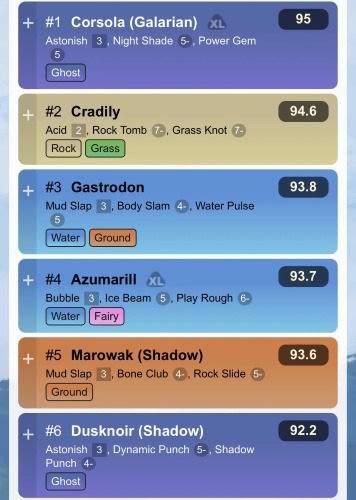
For Pokémon GO players, PvPoke is especially useful when you need to:
- Choose which Pokémon are worth powering up.
- Decide whether a second Charged Move is worth the cost.
- Build teams for Great League, Ultra League, Master League, or limited cups.
- Find counters to Pokémon that keep beating your team.
- Test whether a Pokémon works better as a lead, switch, or closer.
PvPoke does not replace real gameplay skill, but it helps you make better decisions before entering GO Battle League.
What Is PvPoke?
PvPoke is a Pokémon GO PvP resource that helps players analyze battles, rankings, movesets, counters, and team performance. The main value of PvPoke is that it turns complicated PvP matchups into readable data.
Instead of only asking “Which Pokémon is best?”, PvPoke lets you ask better questions:
- Which Pokémon performs best in this league?
- Which moveset gives better coverage?
- Which counters threaten my team?
- Which matchup changes if shields are used differently?
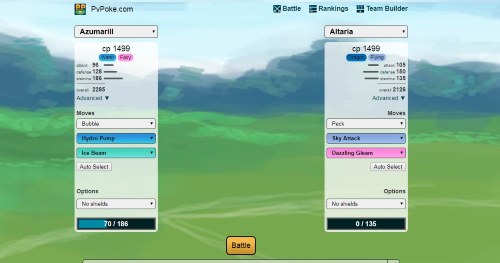
PvPoke is commonly used for several major tools: Rankings, Battle Simulator, Team Builder, and training-style practice tools.
How PvPoke Rankings Work
PvPoke rankings are one of the most visited parts of the site because they help players quickly identify strong Pokémon in each format. You can choose a league or cup, then view Pokémon ranked by overall performance.
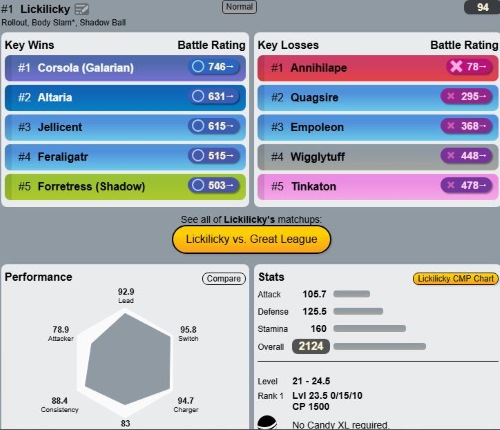
However, rankings should not be treated as a simple “copy the top three Pokémon” list. PvPoke rankings are based on simulated performance, movesets, and matchups. A top-ranked Pokémon may still perform poorly if your team already shares its weaknesses or if the Pokémon requires specific timing, baiting, or shield advantage.
What to Check in PvPoke Rankings
When you open PvPoke rankings, do not only look at the rank number. Check the full profile of the Pokémon.
Look at its recommended Fast Move, Charged Moves, common wins, common losses, and role in the meta. Some Pokémon are ranked highly because they are safe and flexible, while others are strong because they dominate certain matchups but struggle badly elsewhere.
A good PvPoke ranking review should answer three questions:
- Does this Pokémon beat common meta threats?
- Does it need shields to perform well?
- Does it fit the rest of my team?
This is where PvPoke becomes more useful than a basic best Pokémon list.
How to Use PvPoke for Great League, Ultra League, and Master League
Each Pokémon GO PvP league has a different team-building logic. A Pokémon that dominates one format may be average or unusable in another, so you should always select the correct league in PvPoke before comparing rankings.

PvPoke Great League
PvPoke Great League rankings are especially useful because Great League has a 1,500 CP limit and a wide variety of viable Pokémon. Bulk, typing, energy generation, and efficient Charged Moves often matter more than raw attack power.
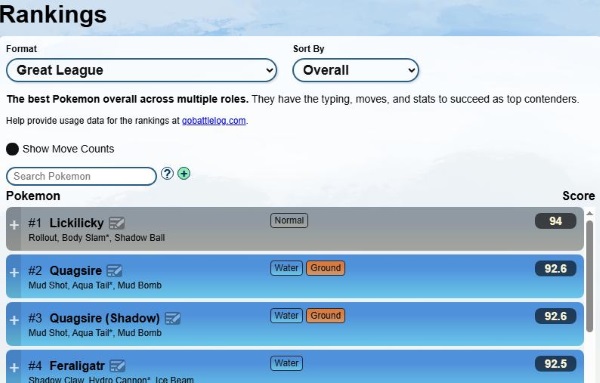
When using PvPoke Great League rankings, focus on balance. Many strong Great League teams include one safe lead, one flexible switch, and one closer that can finish battles when shields are down.
PvPoke can also help you avoid overused but poorly supported picks. A Pokémon may rank well individually, but if your full team is weak to common types like Water, Flying, Steel, Fighting, or Ground, the team may still collapse.
PvPoke Ultra League
PvPoke Ultra League is useful for checking higher-investment Pokémon before you spend XL Candy or large amounts of Stardust. Ultra League teams often require bulkier builds, stronger stat products, and more careful moveset planning.
Before building an Ultra League Pokémon, use PvPoke to compare its matchups against common threats. Also check whether it needs a second Charged Move to function properly. Some Pokémon become much more flexible with two Charged Moves, while others can still perform well with one budget-friendly move.
This matters because Ultra League mistakes are expensive. PvPoke helps reduce wasted resources by showing whether a Pokémon actually fills a role your team needs.
PvPoke Master League
PvPoke Master League rankings are different because there is no CP cap. Pokémon with high stats, strong IVs, XL investment, and powerful movesets tend to matter more.
When using PvPoke Master League tools, pay close attention to IVs, mirror matches, and shield scenarios. A small stat difference can affect Charged Move Priority or whether a Pokémon survives long enough to reach one final Charged Move.
Master League also rewards long-term planning. PvPoke can help you decide whether a legendary, pseudo-legendary, or high-cost Pokémon is worth building before you commit rare resources.
How to Use PvPoke Team Builder to Check Team Weaknesses
The PvPoke Team Builder is where PvPoke becomes more than a ranking site. Rankings help you choose candidates, but Team Builder helps you understand whether those Pokémon work together.
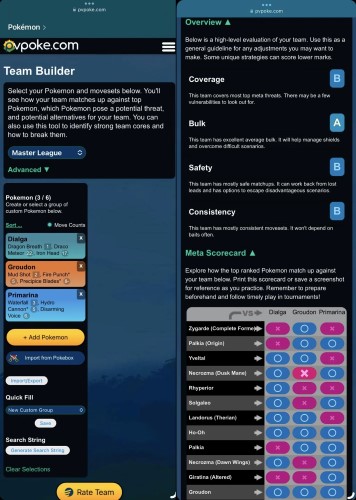
A strong Pokémon GO PvP team needs coverage, pressure, and role balance. If all three Pokémon lose to the same common threat, the team is fragile no matter how high each Pokémon ranks individually.
What PvPoke Team Builder Can Reveal
After entering your team, PvPoke Team Builder can show how your lineup performs against the meta. It highlights threats, coverage gaps, and possible alternatives.
Pay attention to these team-building areas:
- Coverage: Can your team handle common meta Pokémon?
- Bulk: Can your team survive enough damage to reach key Charged Moves?
- Safety: Does your team have a reliable safe switch?
- Consistency: Does your team depend too much on baiting, shield advantage, or perfect alignment?
These scores should guide your adjustments, not dictate every decision. A team with imperfect scores can still work if you understand its win conditions.
How to Improve a Weak PvPoke Team Score
If PvPoke shows that your team is weak to several common Pokémon, do not immediately rebuild everything. Start by identifying the biggest shared weakness.
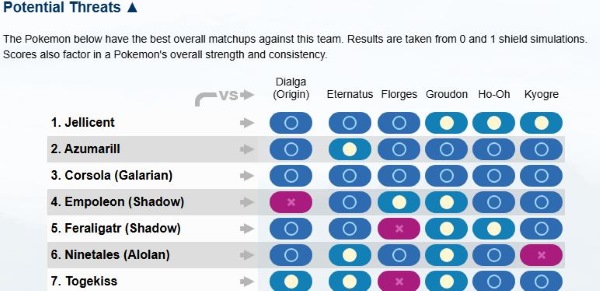
For example, if two or three members struggle against the same Steel-type, Water-type, or Flying-type threat, replace one Pokémon with a better answer. Then run the Team Builder again and compare the new results.
This process is more efficient than randomly swapping Pokémon. You are not just chasing higher rankings; you are building a team with fewer obvious holes.
How to Use PvPoke Battle Simulator Before Spending Stardust
The PvPoke Battle Simulator helps you test individual matchups before investing in a Pokémon. This is especially useful when you are deciding between two similar Pokémon, comparing movesets, or checking whether a specific counter actually wins.
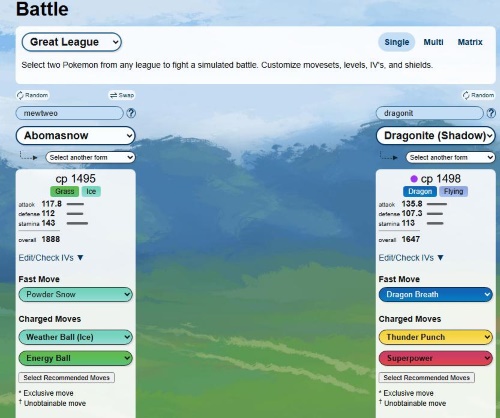
A single battle simulation can show who wins under a chosen shield scenario. A matrix battle can compare multiple Pokémon against multiple opponents, which is helpful when testing team cores or deciding between several candidates.
Best Ways to Use PvPoke Battle
Use the Battle Simulator when you are unsure whether a Pokémon is worth building. Test it against the threats you expect to see in your league or cup.
Try different shield scenarios, such as zero shields, one shield, and two shields. Some Pokémon perform best with shields, while others are better closers when shields are down.
Also test different movesets. A Pokémon may lose with one Charged Move combination but win important matchups with another. This is one of the easiest ways to avoid wasting Elite TMs or building the wrong version of a Pokémon.
PvPoke for Limited Cups: Little Cup, Jungle Cup, Catch Cup, and More
Limited cups change the value of Pokémon dramatically. A Pokémon that is average in open Great League may become excellent in a restricted cup because certain counters are banned, unavailable, or less common.
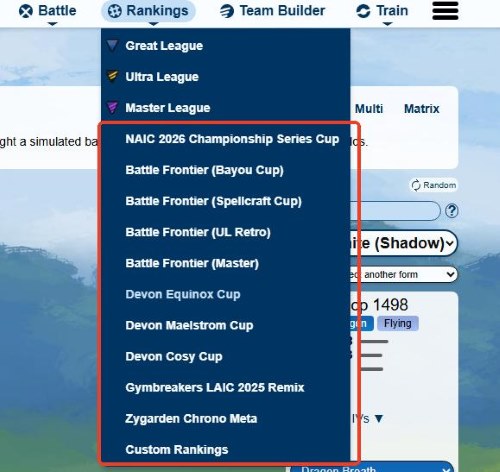
That is why people searche for pvpoke little cup, pvpoke jungle cup, and pvpoke catch cup. Players want fast answers when cup rules rotate, and PvPoke helps them identify which Pokémon fit the format.
How to Use PvPoke for Cup Formats
Before building a team for a limited cup, check the cup rules first. CP limits, eligible types, banned Pokémon, and catch restrictions can completely change the meta.
Then use PvPoke rankings for that specific cup instead of relying on open league rankings. After that, run your chosen team through Team Builder to check whether it has shared weaknesses.
For Catch Cup, be especially careful before spending resources. Since eligibility depends on recently caught Pokémon, your available options may be limited. PvPoke can help you decide which eligible Pokémon are worth investing in and which ones are better left unbuilt.
Common PvPoke Mistakes to Avoid
PvPoke is powerful, but it is easy to misuse if you only look at the surface-level ranking numbers.
Mistake 1: Copying the Top Three PvPoke Rankings
The top three ranked Pokémon in a league do not automatically make the best team. They may share weaknesses, compete for the same role, or require different shield strategies.
Use rankings to create a candidate list, then use Team Builder to test whether those candidates actually work together.
Mistake 2: Ignoring Movesets
Movesets can completely change a Pokémon’s value. A Pokémon with the wrong Fast Move or missing Charged Move may perform very differently from its PvPoke ranking.
Always check the recommended moves before building. If a Pokémon needs an Elite TM to perform well, decide whether that investment makes sense for your account.
Mistake 3: Forgetting Team Roles
A good team usually needs role balance. You need a lead that can handle common openers, a safe switch that can recover bad matchups, and a closer that can finish the game when shields are gone.
PvPoke can help you identify strong Pokémon, but you still need to understand how each one functions inside your team.
Mistake 4: Treating Simulations as Guaranteed Results
PvPoke simulations are guides, not promises. Real battles include lag, timing mistakes, energy leads, shield reads, swap decisions, and human prediction.
Use PvPoke to understand matchups, then practice until you know how to play those matchups under pressure.
How PoKeep Location Changer Can Support Pokémon GO Preparation

After using PvPoke to decide what Pokémon or resources you need, PoKeep Location Changer can support location-based preparation in Pokémon GO. PoKeep is designed for changing GPS location on iPhone and Android, supports Pokémon GO, and includes features such as 360° GPS joystick movement, custom speed, cooldown timer, route simulation, jump teleport, GPX import, saved locations, and no jailbreak/root setup.


This makes PoKeep useful for players who want more control over how they explore in location-based games. For example, if your PvPoke research shows that you need more Candy for a certain Pokémon, a movement route can help you plan more efficient in-game activity. If you want to revisit useful areas, saved locations and history records can make preparation easier.
PoKeep should be used as a preparation helper, not as a replacement for PvP skill. PvPoke helps you understand the team; PoKeep helps with the location-based part of Pokémon GO preparation. Always play responsibly and check the game’s official rules before using any GPS-changing tool.
PvPoke FAQ
Is PvPoke good for beginners?
Yes. PvPoke can look complex at first, but beginners can start with rankings and Team Builder. Once you understand those two tools, Battle Simulator and matrix battles become much easier to use.
Are PvPoke rankings always accurate?
PvPoke rankings are useful, but they are not perfect predictions. They are based on simulations and assumptions, while real battles involve timing, shields, swaps, energy leads, IVs, and player decisions.
Can I use PvPoke to find the best Great League teams?
Yes, but do not only copy top-ranked Pokémon. Use PvPoke Great League rankings to find strong options, then use Team Builder to check whether your team has balanced coverage.
Does PvPoke help with Ultra League and Master League?
Yes. PvPoke Ultra League and PvPoke Master League rankings are especially helpful because these leagues often require bigger investments. Checking matchups first can prevent wasted Stardust, Candy XL, or Elite TMs.
Should I use PvPoke for Little Cup, Jungle Cup, and Catch Cup?
Yes. Limited cups have different rules and metas, so cup-specific PvPoke rankings are more useful than general league rankings. Always check the correct cup before building a team.
How does PoKeep fit into a PvPoke workflow?
PvPoke helps you decide what Pokémon and teams to build. PoKeep can help with location-based preparation by supporting GPS changes, joystick movement, route planning, cooldown-aware movement, and saved locations for Pokémon GO.
 Related Articles






 Leave Your Comment